Composable Finance & Ledger Platform for BFIs
Sumo Ledger
Product Design • Fintech • Ledger Management
My Role
Product Scope
My Work Timeline
2023
Collaborators
- Anjil Bishwakarma - UI/UX Designer
Overview
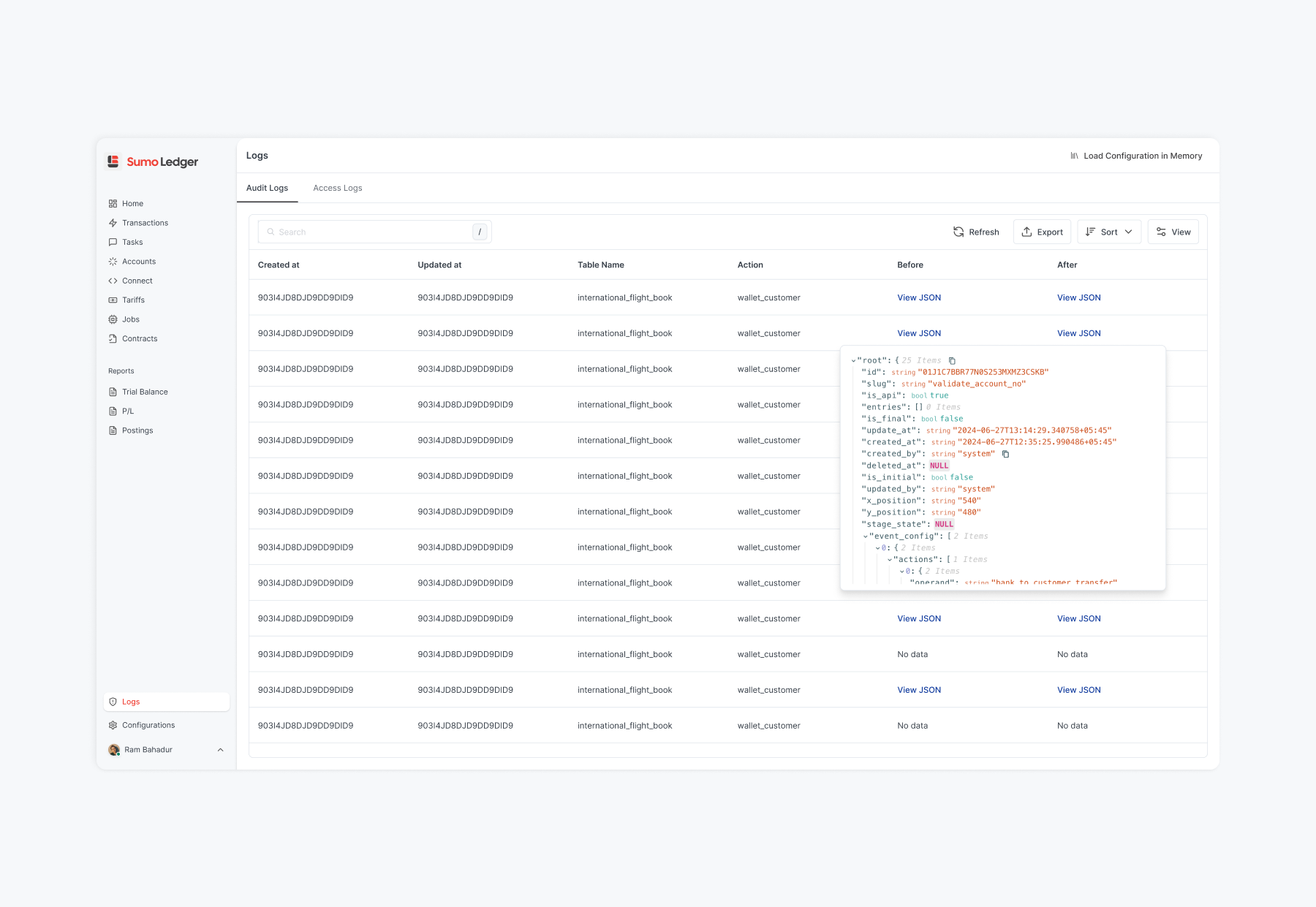
Sumo Ledger is a composable, API-first finance platform that lets banks, wallets, neobanks and fintechs build and automate financial workflows like building blocks on a multi-asset, multi-currency core ledger engineered to handle up to 1,500 transactions per second per account.
Context
Financial Products today are too rigid and monolithic. The rigidity of ledgers and traditional core systems make it hard to build financial products that are secure, flexible, scalable.
It's promise is that teams can "build & integrate like legos, to any other software system or data source," assembling financial products from modular pieces.
My Role
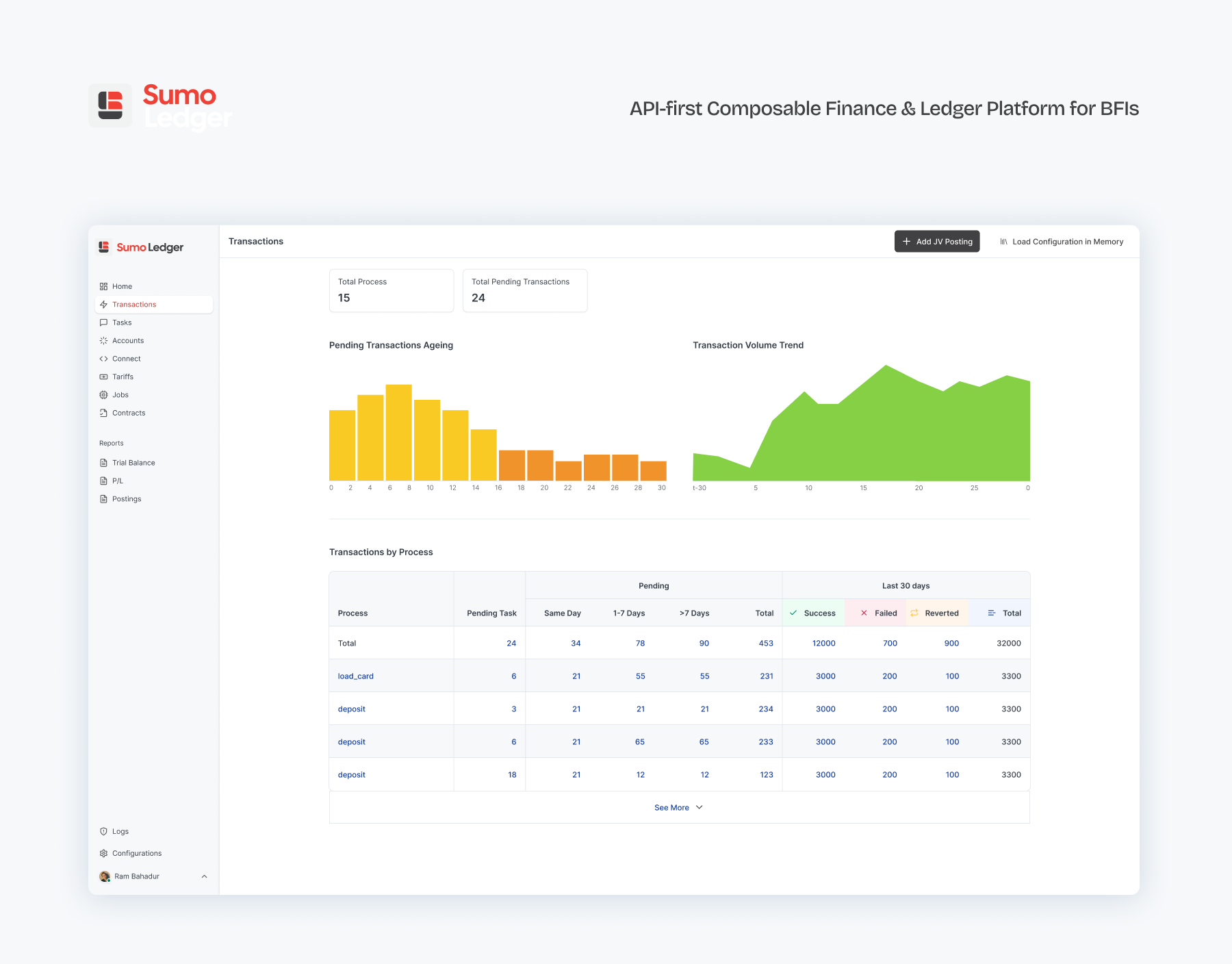
Led the design of a system that was easy to configure, revealing business process and workflows while keeping the complexity of the ledger and financial engine.
As the Lead Product Designer, I was responsible for the end-to-end design of the platform's interface, I worked closely with the product, design, and engineering teams.
The Problem
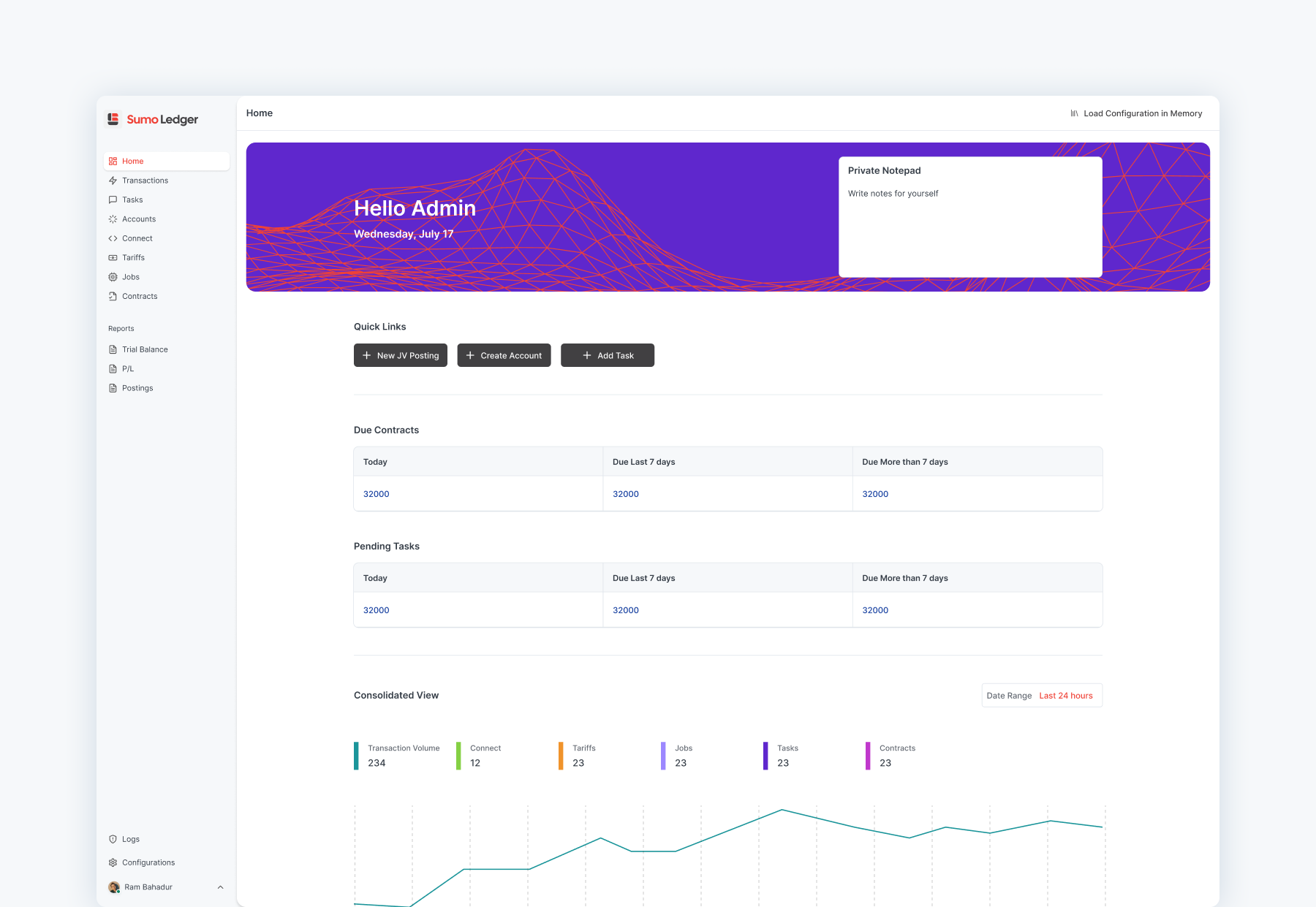
Changing a financial workflow means waiting on engineering with little real-time visibility.
BFIs typically stitch together inflexible core-banking systems, spreadsheets and bespoke scripts to move and reconcile money. Building or changing a financial workflow means waiting on engineering, integrations are brittle, and there's little real-time visibility into balances and transactions across asset types. The result is slow product velocity and operational risk.
What I Did
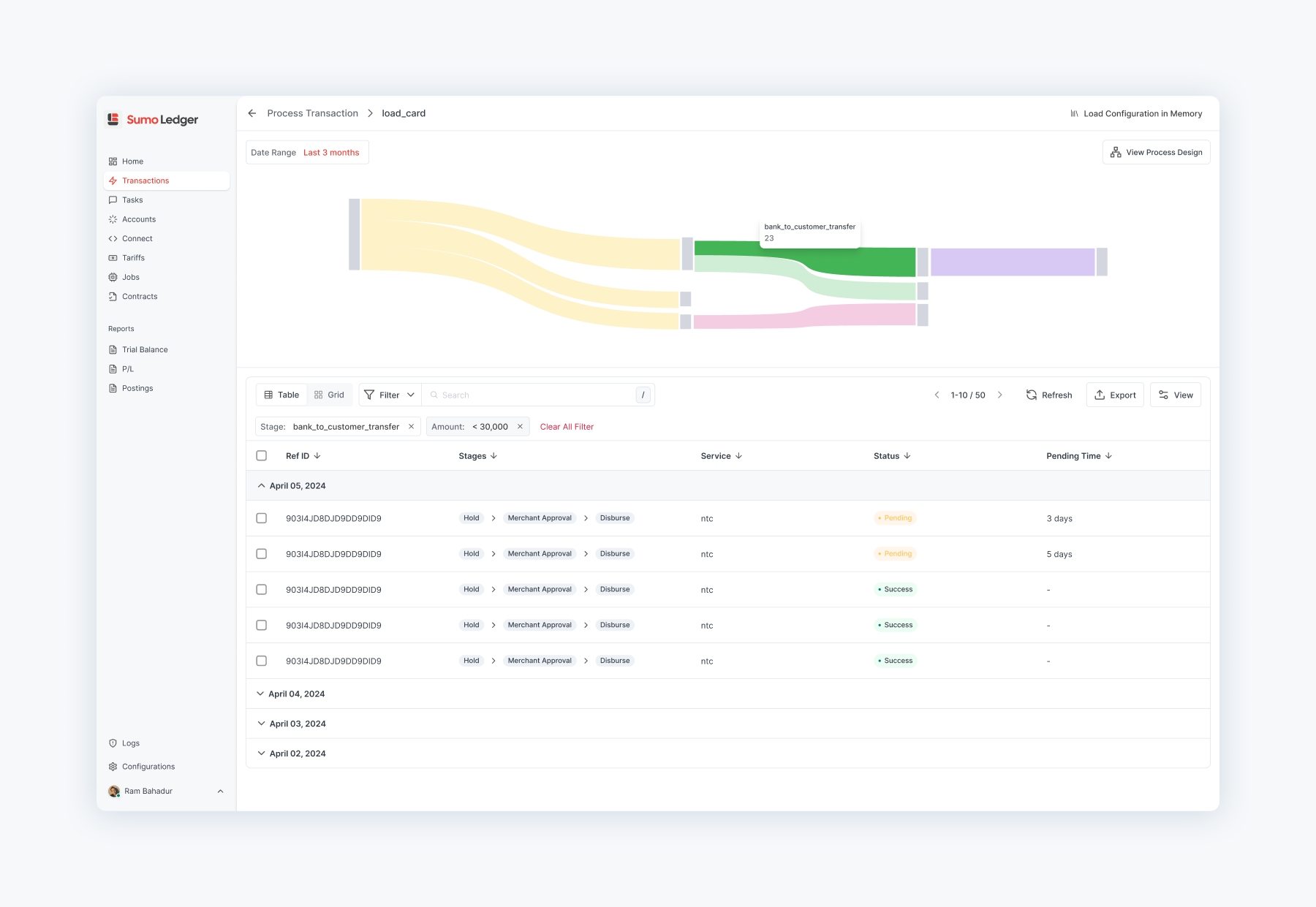
The core challenge was to design an easy to use experience for a powerful, low-level ledger and processing engine legible to the operators who configure it.
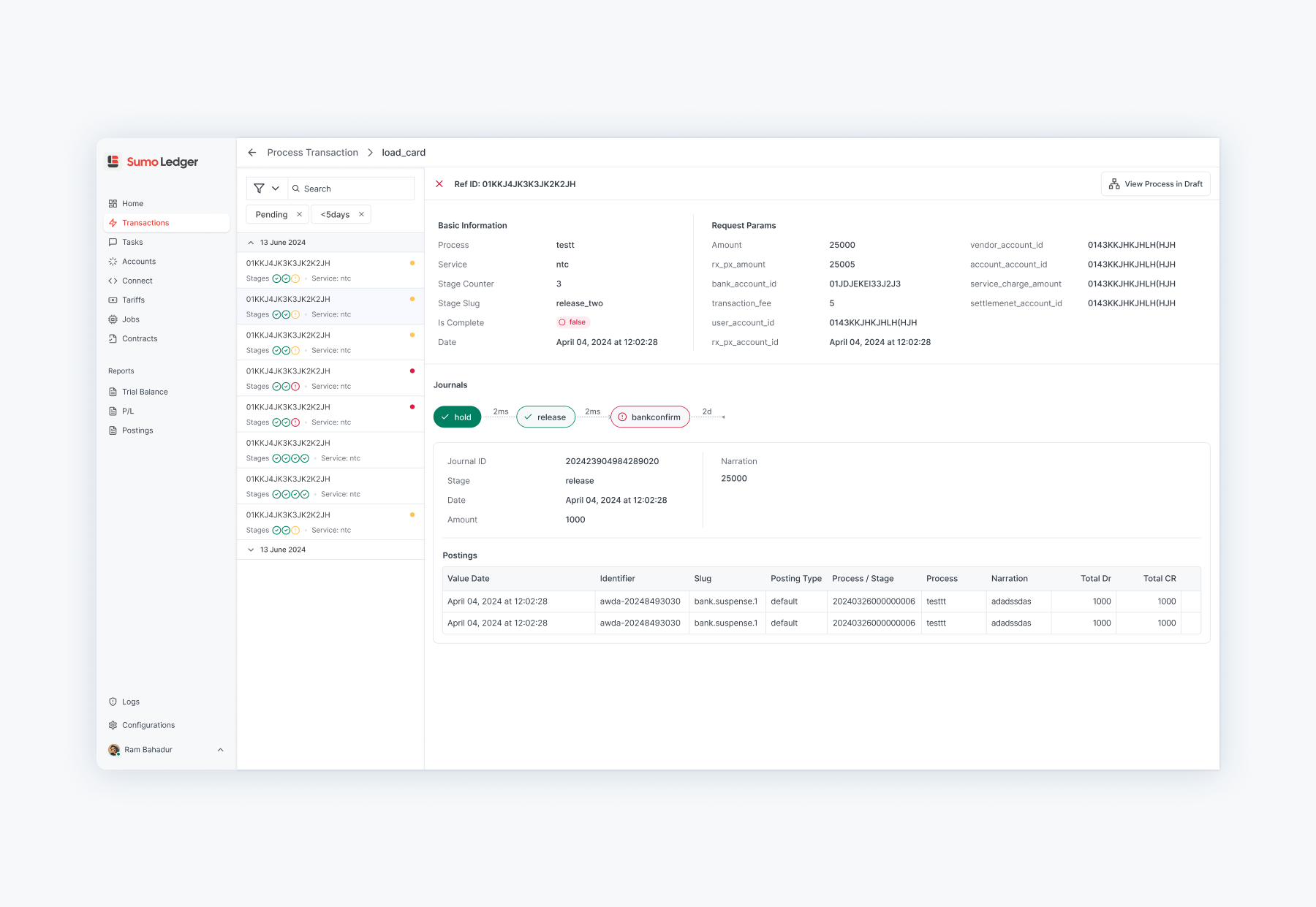
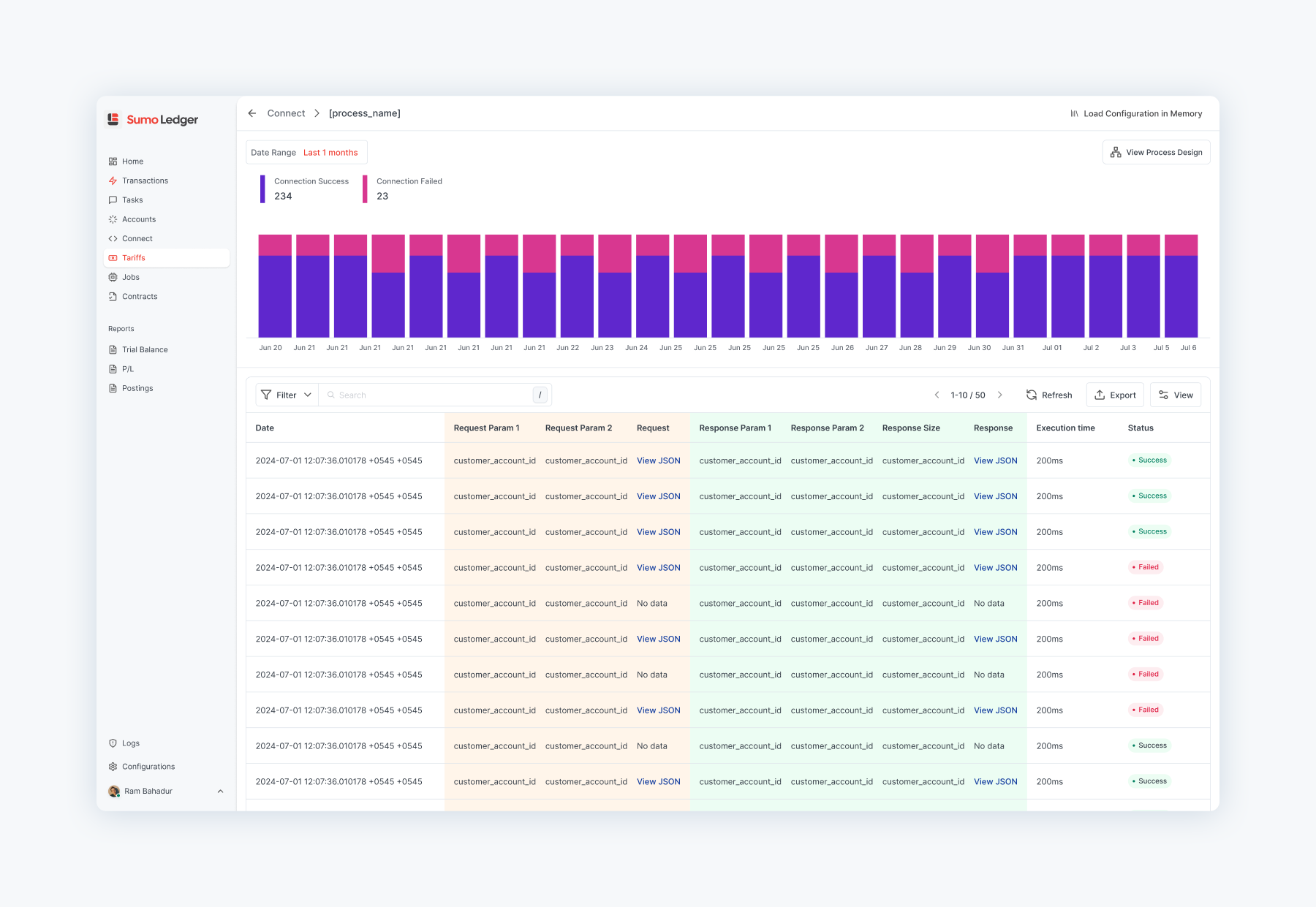
- Designed the product around six composable modules — Accounts, Process, Tariff, Tasks, Reports and Connect. An operator can build a workflow by combining blocks rather than commissioning custom code.
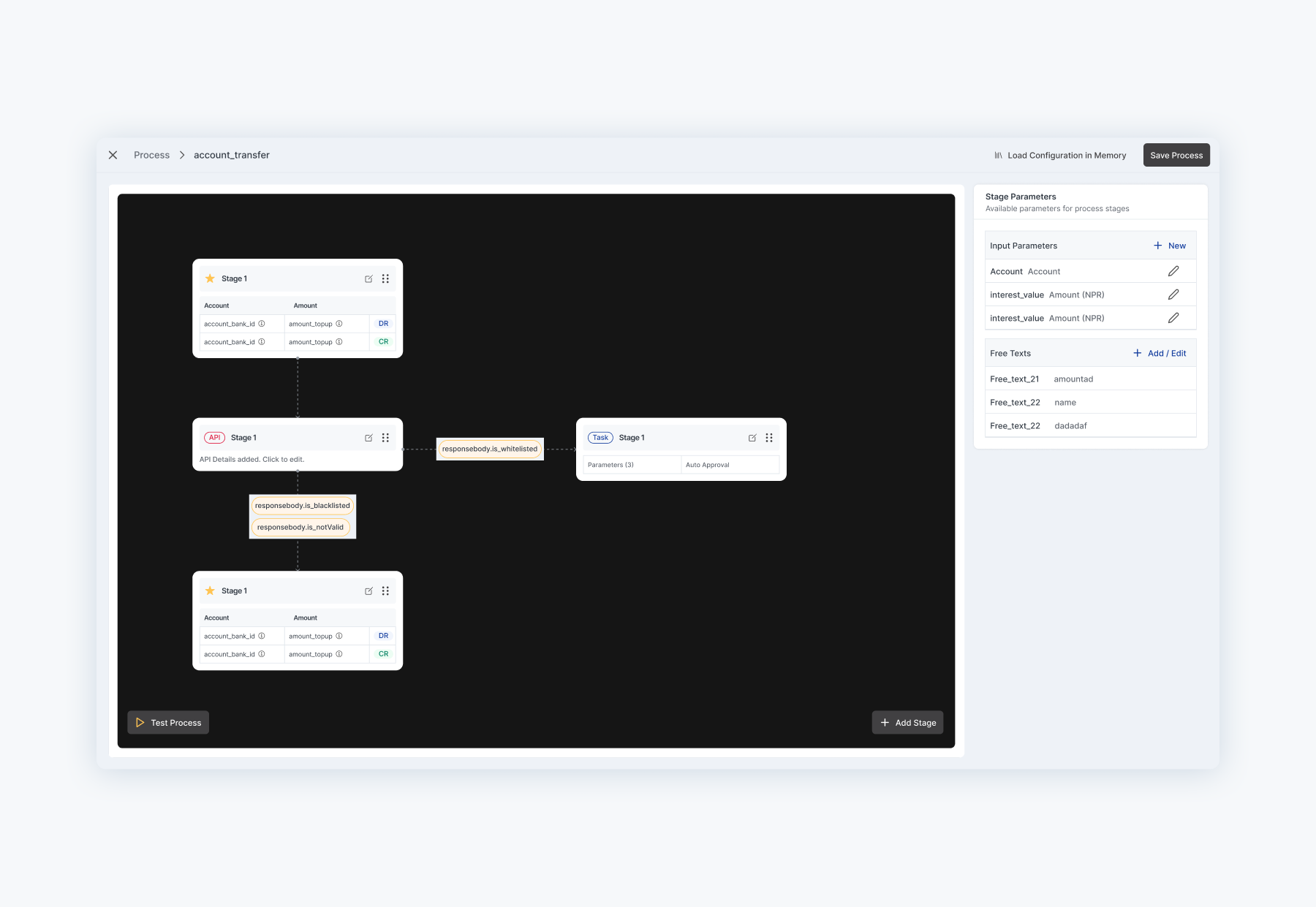
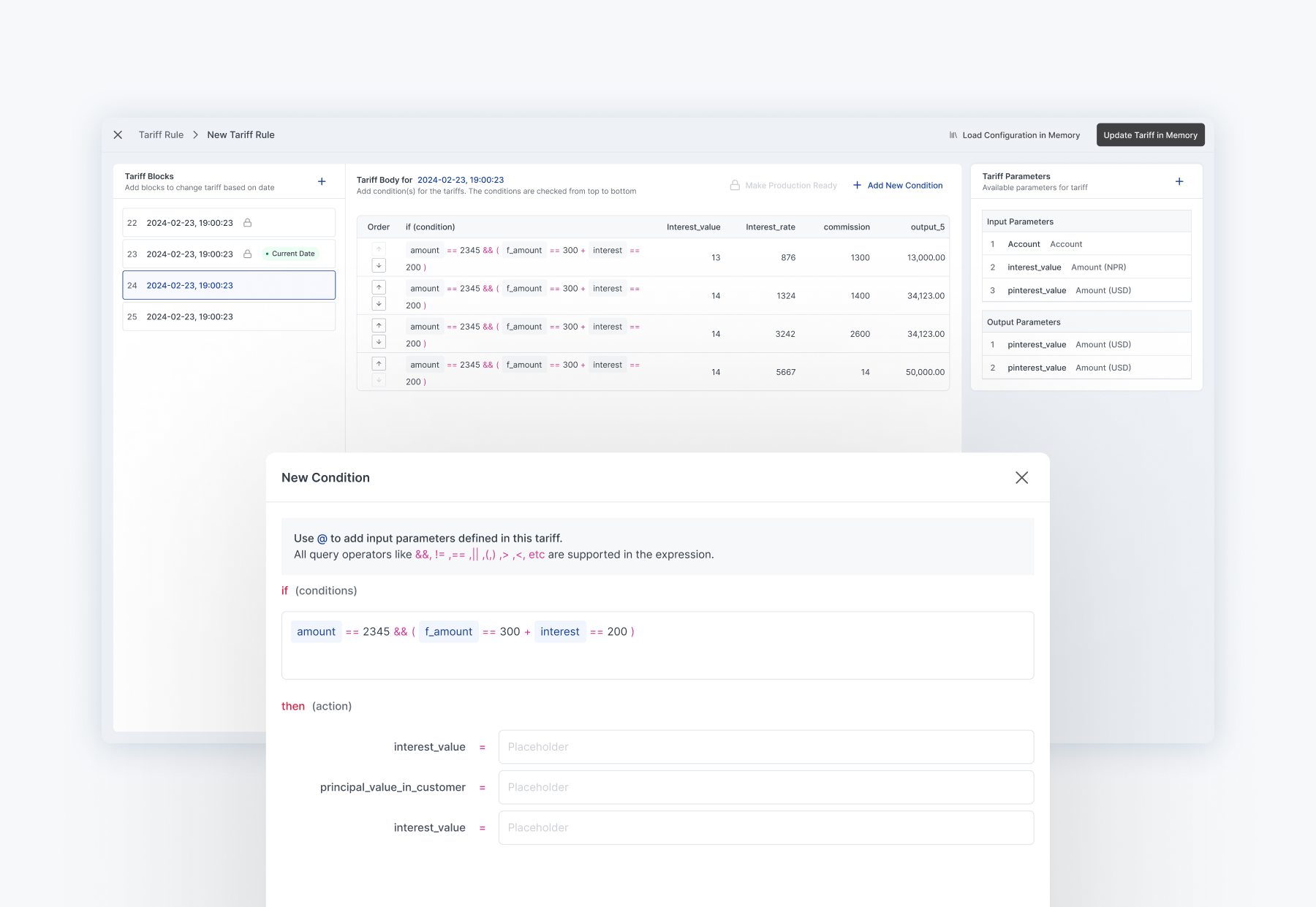
- Made the "Process" engine visual — turning business-process and pricing logic into a configurable canvas, with the Tariff rules engine surfaced as something a non-engineer can reason about. Balancing
- Tamed complexity in the ledger UI — multi-asset, multi-currency balances and a hierarchical chart of accounts presented so real-time financial state is actually readable.
Outcome
Currently used by 20+ financial products to power their financial workflows.
The platform supports high-throughput processing up to 1,500 transactions per second per ledger account with real-time webhooks and event-driven notifications, letting institutions automate financial workflows and gain live visibility without manual intervention. The modular, API-first model means new financial products can be composed and integrated far faster than on a traditional core.
Reflection
The hardest design work here was exposing enough of a deeply technical engine to make it powerful, while hiding enough to keep it usable.