Multi-tenant Cloud-based Business Operating System for SMEs
Tigg
Product Design • Fintech • Retail
My Role
UI / UX Designer
Brand Designer
Product Scope
My Work Timeline
2021-2022 (1.5 years)
My Deliverables
- Competitive Analysis
- Product Planning
- Low-fidelity wireframes
- High Fidelity Mockups
- Usability Testing and Findings
Collaborators
- Shreel Adhikari - UI Designer
Link to Website / App
https://www.tiggapp.comImpact
4000+
Active Organizations
10000+
Active Users
80%
Retention Rate
Overview
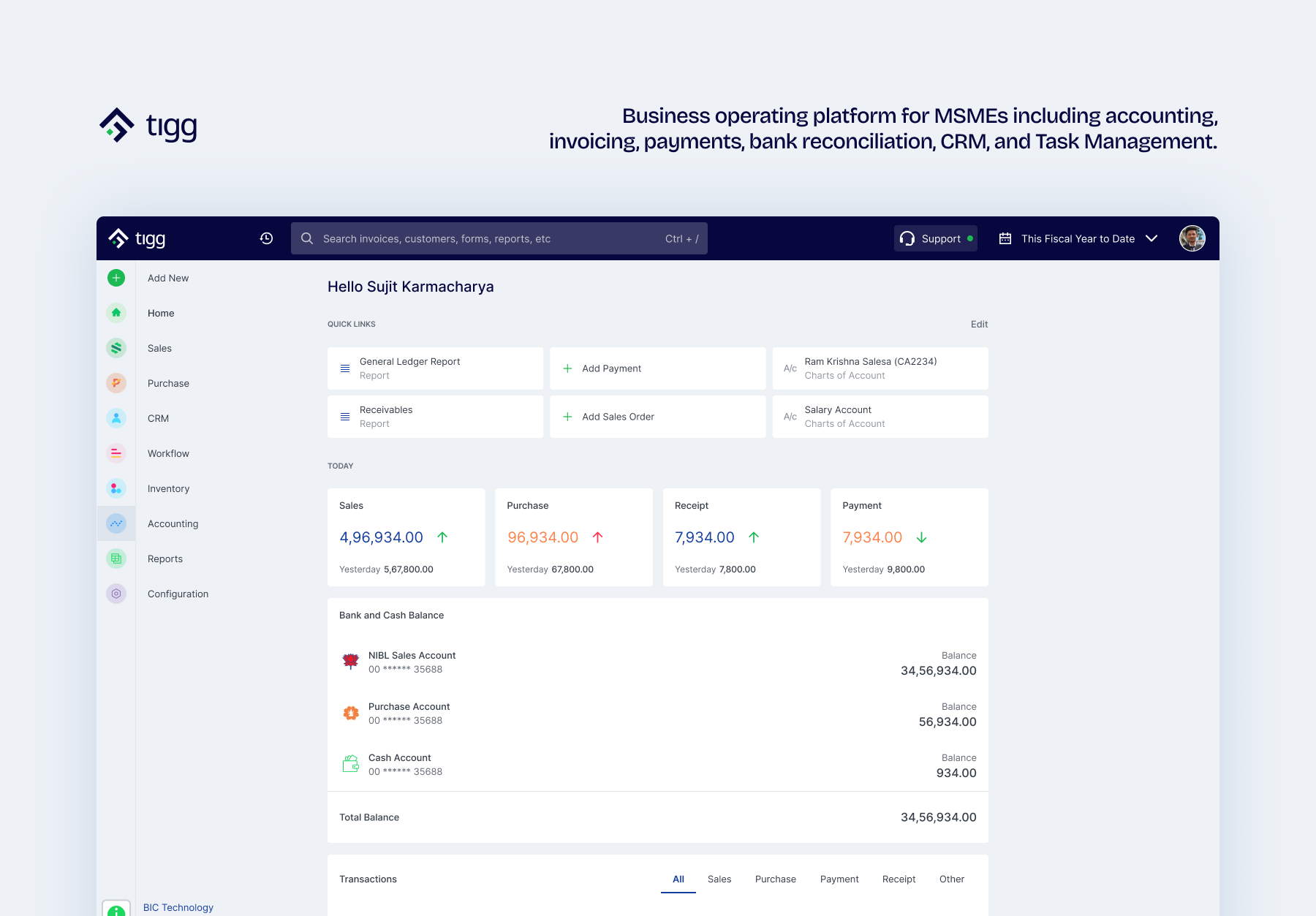
Tigg is a cloud-based multi-tenant accounting and business operating system for small and medium-sized enterprises (SMEs) in Nepal. It serves as a comprehensive platform for businesses to manage their finances, inventory, billing, and overall operations, helping them digitize and streamline their business processes.
Context
At the time of our involvement, the market for business management software in Nepal was fragmented, with many SMEs still relying on traditional methods like paper-based accounting, spreadsheets, or isolated desktop applications.
These traditional approaches often led to inefficiencies, errors, lack of real-time visibility, and challenges in meeting regulatory compliance requirements set by government bodies like the Inland Revenue Department (IRD).
Tigg was developed to address these pain points by offering a unified, cloud-based platform that combines accounting, inventory management, billing, and other essential business operations into a single, cohesive system. The platform caters to a diverse range of industries, including retail, wholesale, manufacturing, and service-based businesses, providing them with the tools they need to modernize their operations, improve accuracy, and gain better control over their business finances and inventory.
My Role
I led the Product Design of Tigg from its early stages to its launch and beyond.
I worked closely with the founders to understand their vision and translate it into a user-centered product. I worked closely with developers and software architects to plan the integration of the mobile application with its web-based interface.
Our work was guided by close collaboration with a panel of accounting firms across Nepal who brought invaluable domain expertise to ensure the product met the specific needs and regulatory requirements of the Nepali market.
The Problem
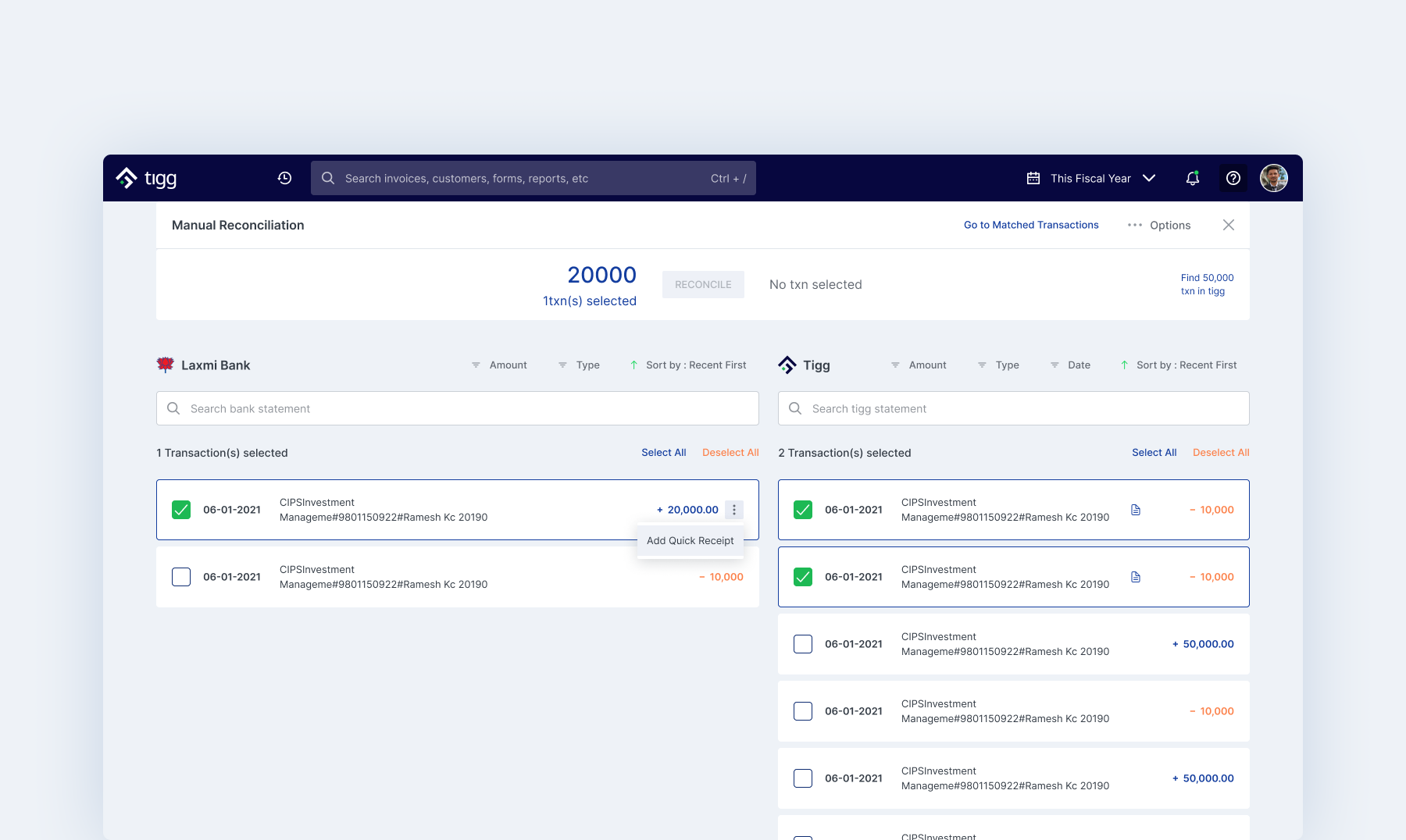
Nepali SMEs relied heavily on manual, paper-based systems for managing their finances and inventory. Existing products were either too complex, too expensive, or not designed for the Nepali market and many founders were financially inclined to using them due to lack of the value provided by them.
This often led to inefficiencies, errors, lack of real-time visibility, and challenges in meeting regulatory compliance requirements set by government bodies like the Inland Revenue Department (IRD). Additionally, not being able to see actual business data devoided the founders from making informed decisions about their business.
What I Did
I led the entire product design from first day of the project initiation till product release and beyond.
Among all the responsibilities leading the product design of the product, here are a few highlighted ones:
-
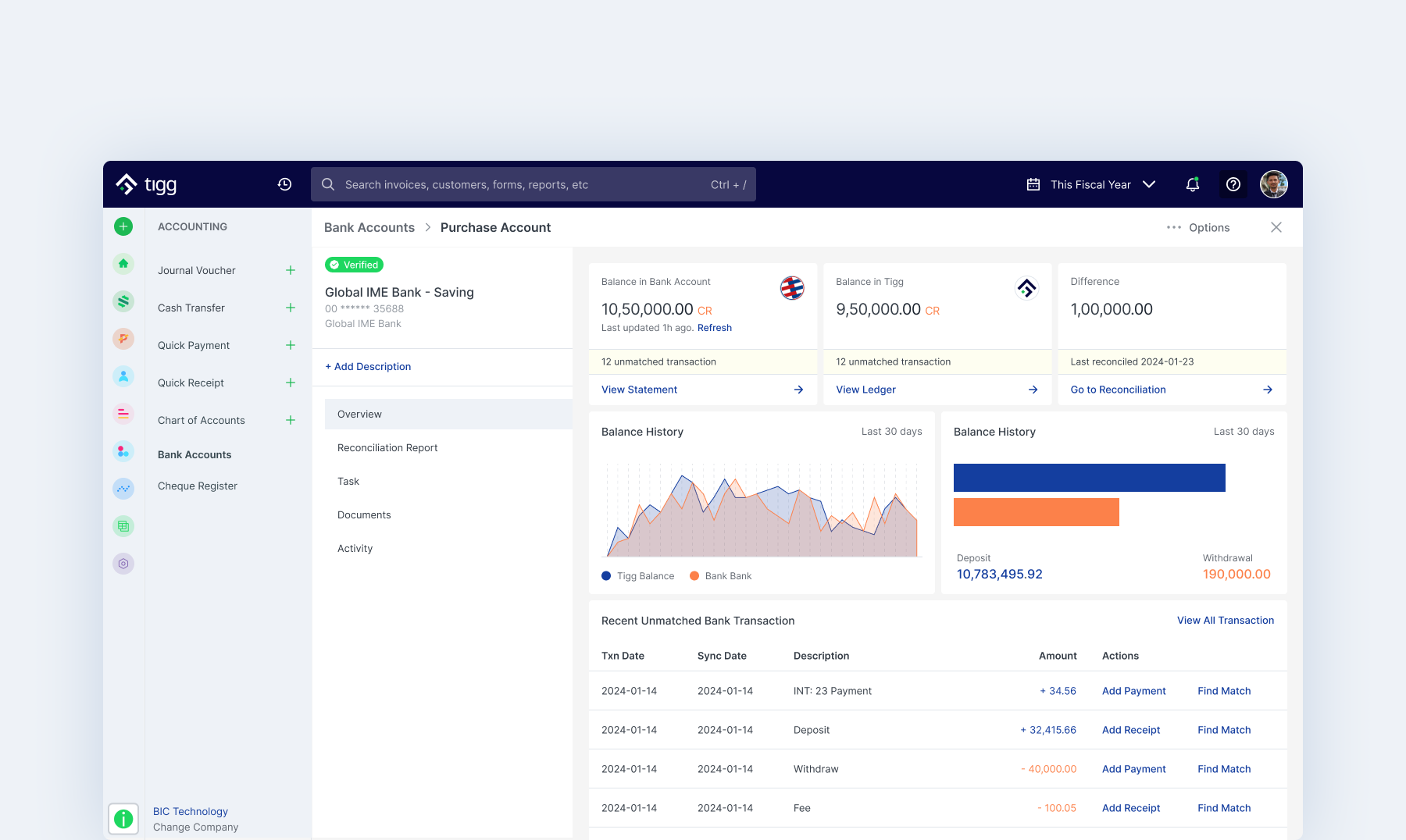
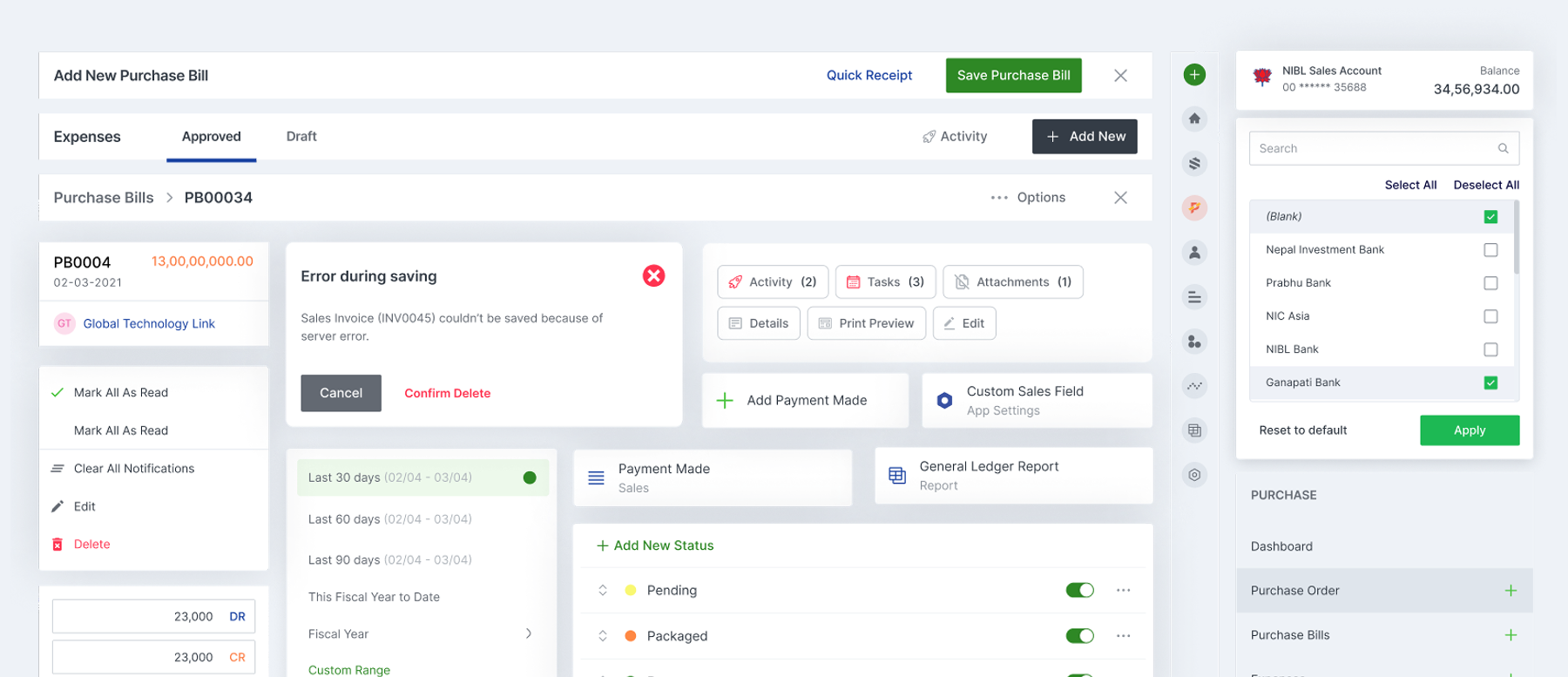
Built a Design System for an enterprise app from the ground up : This was required to provide a unified and consistent user experience across the web application, mobile application, user portal, and admin portal.
-
Reworked navigation in Tigg : Iteratively prototyped and tested navigation for months to ensure the product was scalable and could support future feature additions while maintaining a simple and intuitive user experience.
-
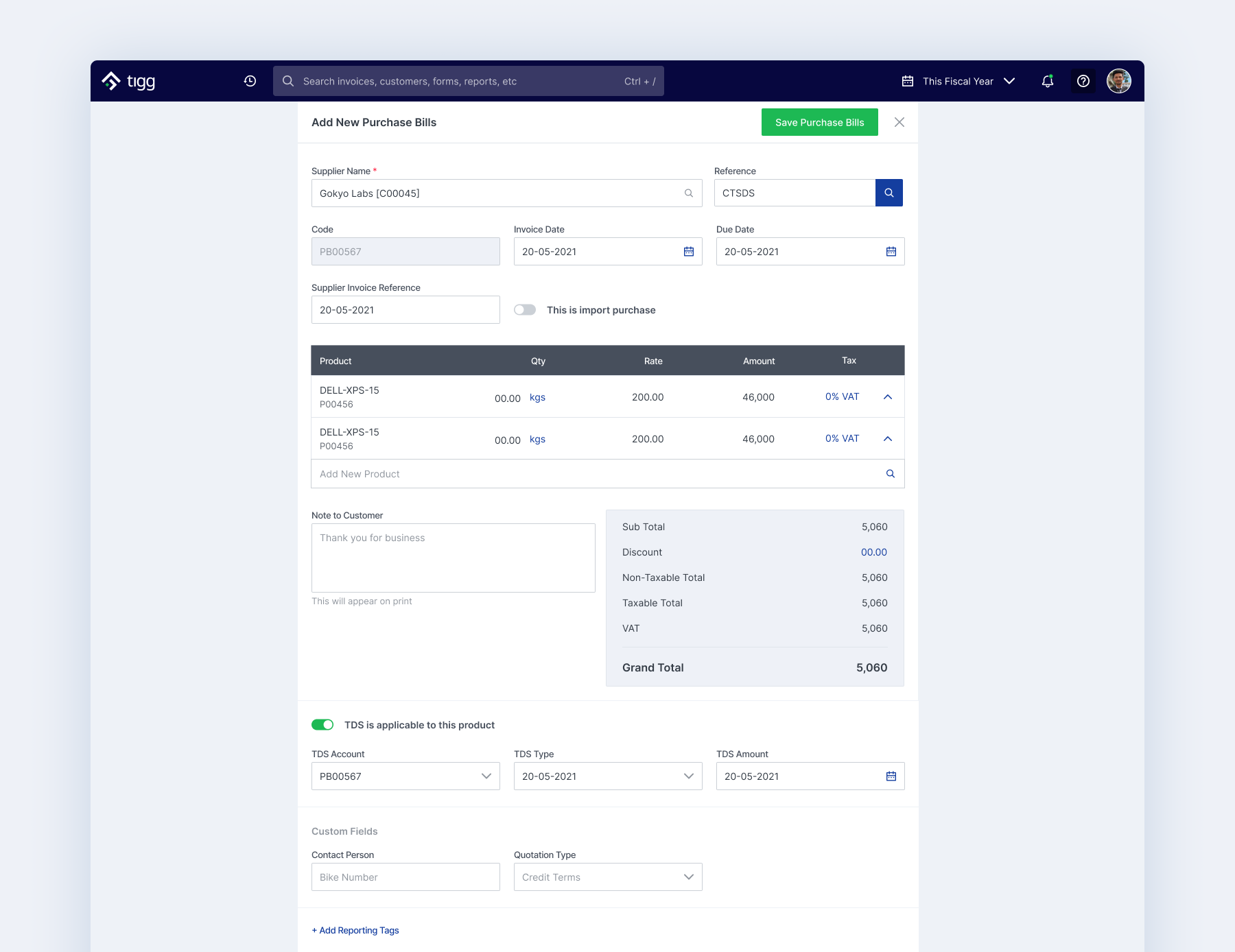
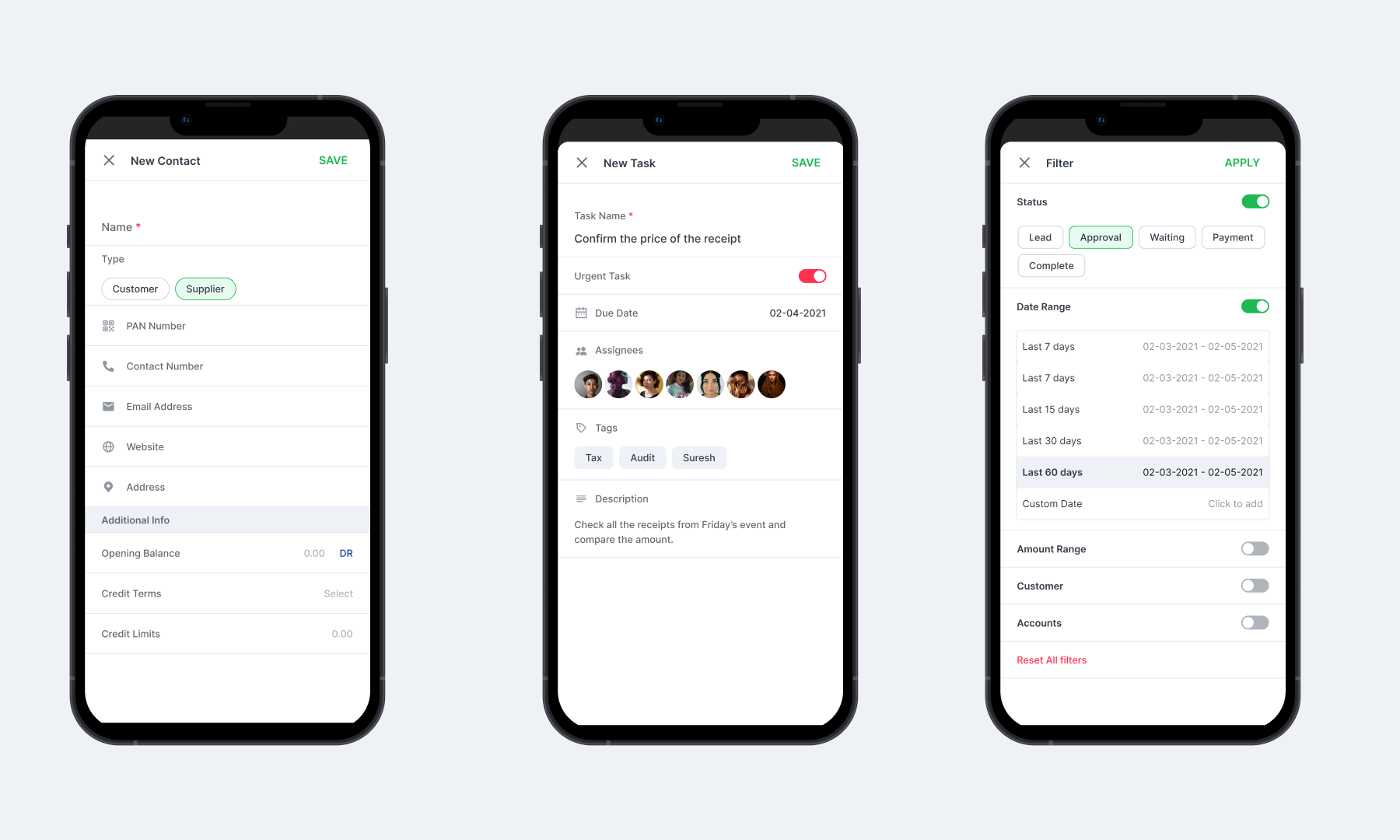
Designed the form and input components system : Forms form a core component of accounting recording process. To provide a seamless and efficient user experience,
-
Fully customizable invoice design : Since Nepali businesses operate in a highly diverse economic environment, businesses required invoices that could be tailored to their specific needs and regulatory requirements. This was a challenging task due to the complex and diverse nature of business data, but it was essential for providing a seamless and efficient user experience.
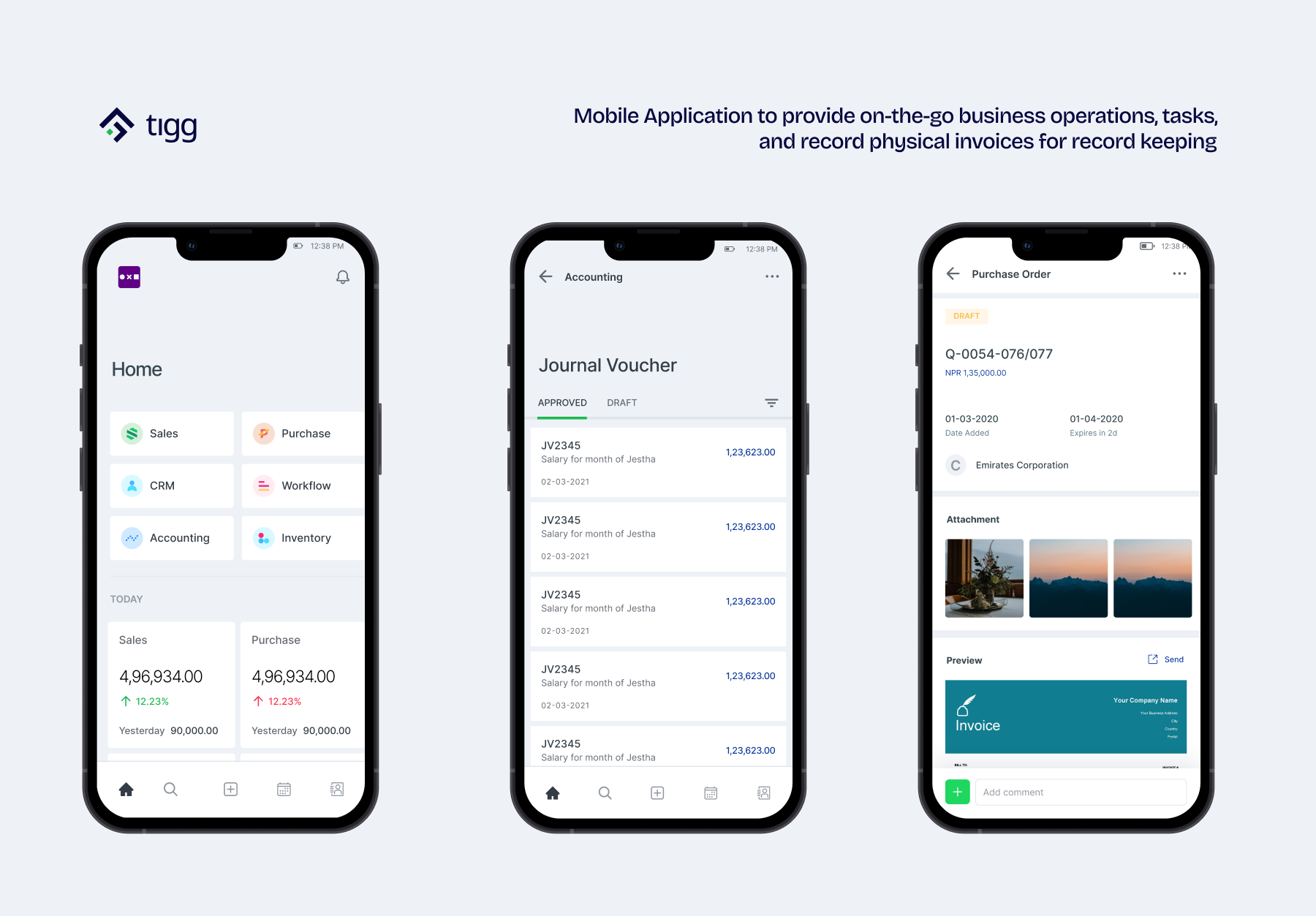
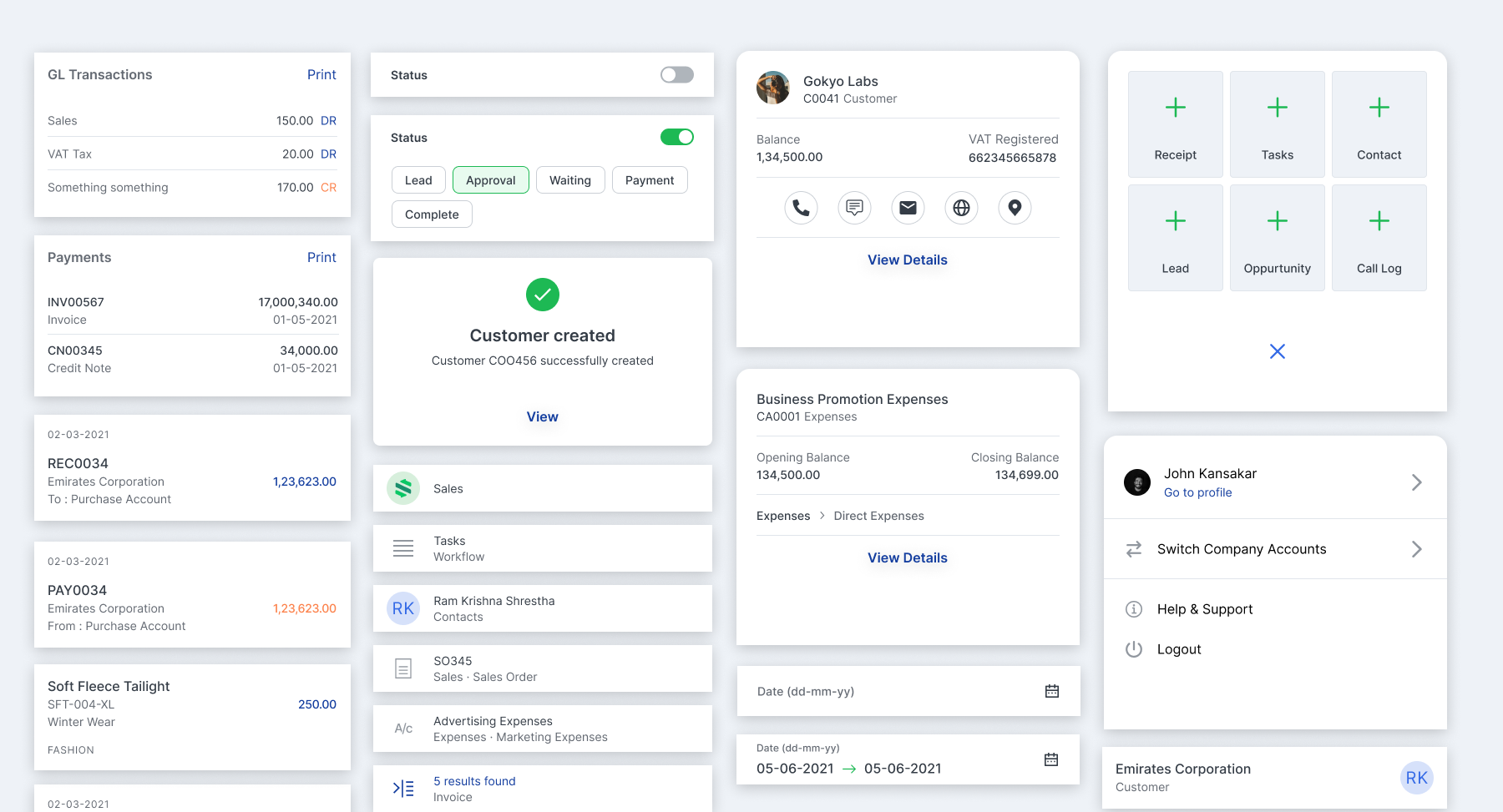
Mobile App
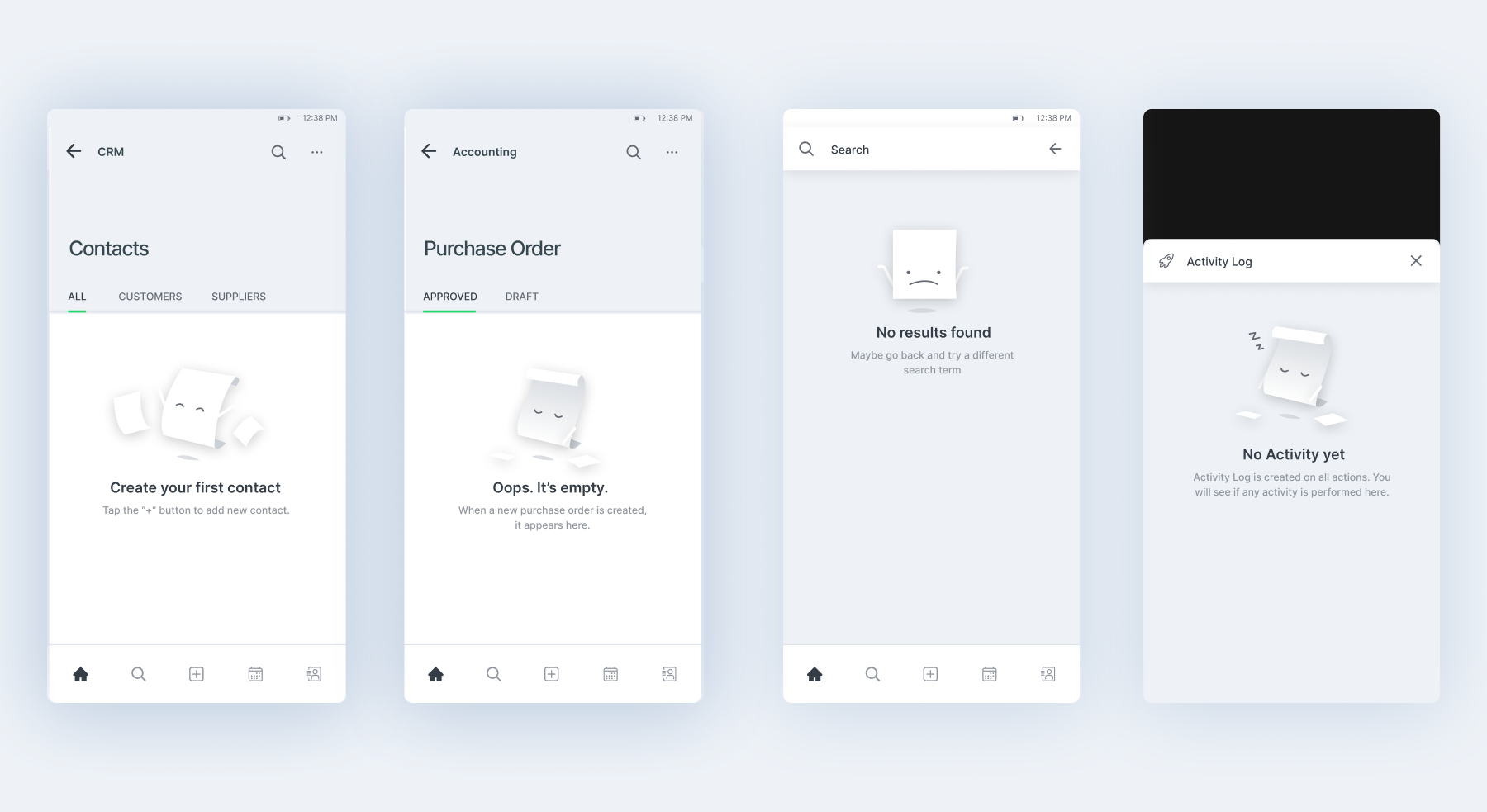
Mobile App for business owners to manage their business on-the-go.
The primary feature was to let business owers to records their expenses, assign tasks, and process payments.
Outcome
Tigg has won multiple awards and has been recognized as one of the most innovative startups in Nepal.
Currently, over 3000 MSMEs in Nepal use Tigg to manage their business finances and inventory. The platform has helped businesses to digitize their operations, improve efficiency, and gain better control over their business finances and inventory.
I have been using Tigg for the past year and it has changed the way I run my business. The user interface is intuitive and easy to navigate, making it simple for me to manage my finances and stay on top of my expenses. The software also integrates seamlessly with business tools, saving me time and streamlining my workflow. I highly recommend Tigg to our clients who are looking for a reliable and efficient accounting solution. - Sujeet Regmi, Director of Finance, Sajilo Sewa
Reflection
Tigg was my first experience working as a lead product designer on an enterprise app. It taught me the importance of building a solid design foundation before diving into detailed designs, and the value of involving users early and often in the design process.
Related
Extension of Tigg to provide modern POS system for retail stores. Tigg POS
Extenstion of Tigg for accounting firms to manage their clients and banks to provide loan services to companies through credit management. Tigg Advisor